

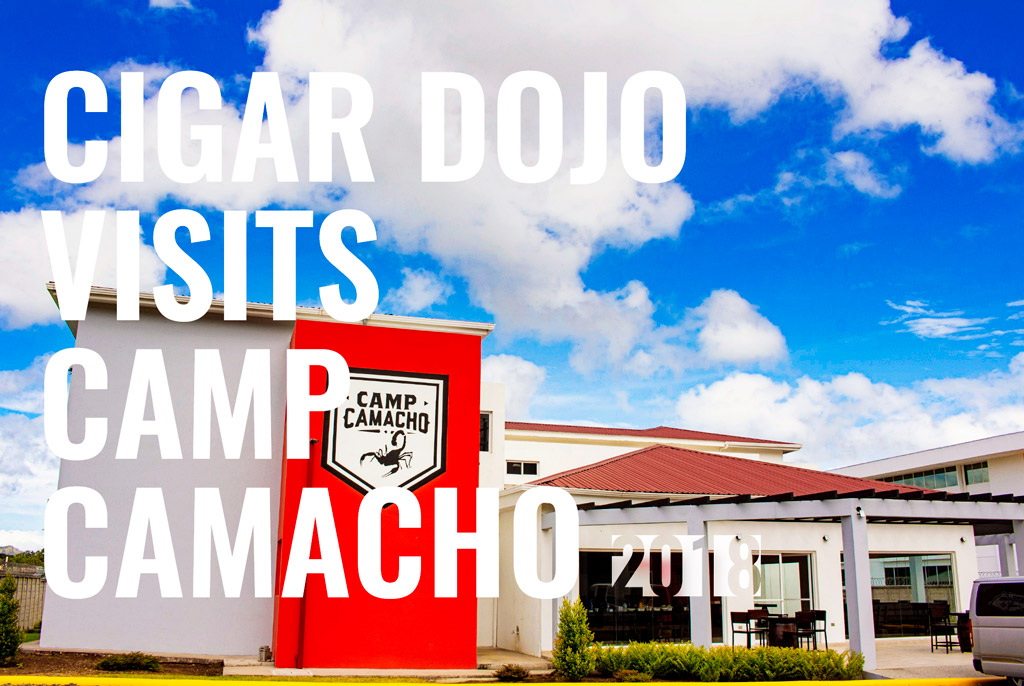
In August of this year, Cigar Dojo headed to Tegucigalpa—the capital of Honduras—meeting with a small group from Camacho Cigars and making the two-hour trip east to Danlí. The idea was to get a sneak peek into Camacho’s upcoming endeavor of re-launching Camp Camacho—a cigar-based tour that was hosted throughout the early 2000s, eventually being retired roughly 10 years ago.
For the seasoned smoker with Central American stamps already in their passport, the trip begins in familiar fashion, loading up in a van that’s packed to the brim with beer, luggage, and cigars. And Camacho is quick to impress, wheeling out an extraordinarily large and heavily lacquered humidor, complete with loud Camacho-inspired colors, handles on each end, and a full suite of cigars, carefully tucked behind a myriad of oak doors and trays. This included the usual suspects (Camacho Corojo, Criollo, Connecticut, etc.), as well as an unexpected selection from the company’s more limited offerings (Diploma Special Selection Robusto—a guilty pleasure of the Dojo—was a nice touch).
SEE ALSO:
Arriving at the guest house, one can’t help but be struck by the juxtaposition of nature and state-of-the-art engineering, with Camacho’s newly built Diadema Cigars de Honduras factory and accompanying guest house being separated from (what we would call) the jungle by a 16-foot-tall wall on all sides. The guest house is massive, offering nearly 9,000 square feet and containing 11 rooms—each complete with two queen-sized beds and a full bathroom. This will be a significant departure for most that have experienced cigar excursions before; without the rustic, mountainous scenery from a nearby window, each room in the guest house could easily fool tenants for being a four-star hotel room. The majority of down time is spent in the main hall of the house; this is a massive room replete with flat-screen TVs, two dining tables, an oversized lounge area, and a full kitchen/bar area (stocked sufficiently). This was easily enough space for the Dojo crew to get creative (including makeshift beer pong, hacky sack, and even impromptu baseball sessions), and the Camacho team seemed open to our suggestions of a regulation-sized table tennis table, corn hole boards, and foosball setup; there’s honestly enough space to go nuts here.
View this post on Instagram
Apart from familiarizing ourselves with the bar, the first day was spent delving straight into the action, meeting with Camacho’s general manager at Diadema Cigars de Honduras, Manuel Batista. Manuel offers a tasting seminar with a similar feel to Davidoff’s experience in the Dominican Republic, as he worked closely with the Kelner family for the past 21 years before making the move to Honduras. The seminar involves sampling “cylinders” of tobacco—termed as such because they are rolled from a single tobacco priming—moving from seco to viso to ligero, and finishing with a fully blended cigar that is comprised of each ingredient. Guests then choose a blend by selecting percentages of tobaccos from a healthy list of options (as well as some that aren’t listed, if the factory can meet your request), being guided by Manuel’s expertise suggestions. Cigar Dojo’s first day of the trip concluded with a barbecue hosted at Manuel’s home; here we found a swimming pool, trampoline, and a literal gaggle of geese that were more intimidating than Manuel’s guard dog.

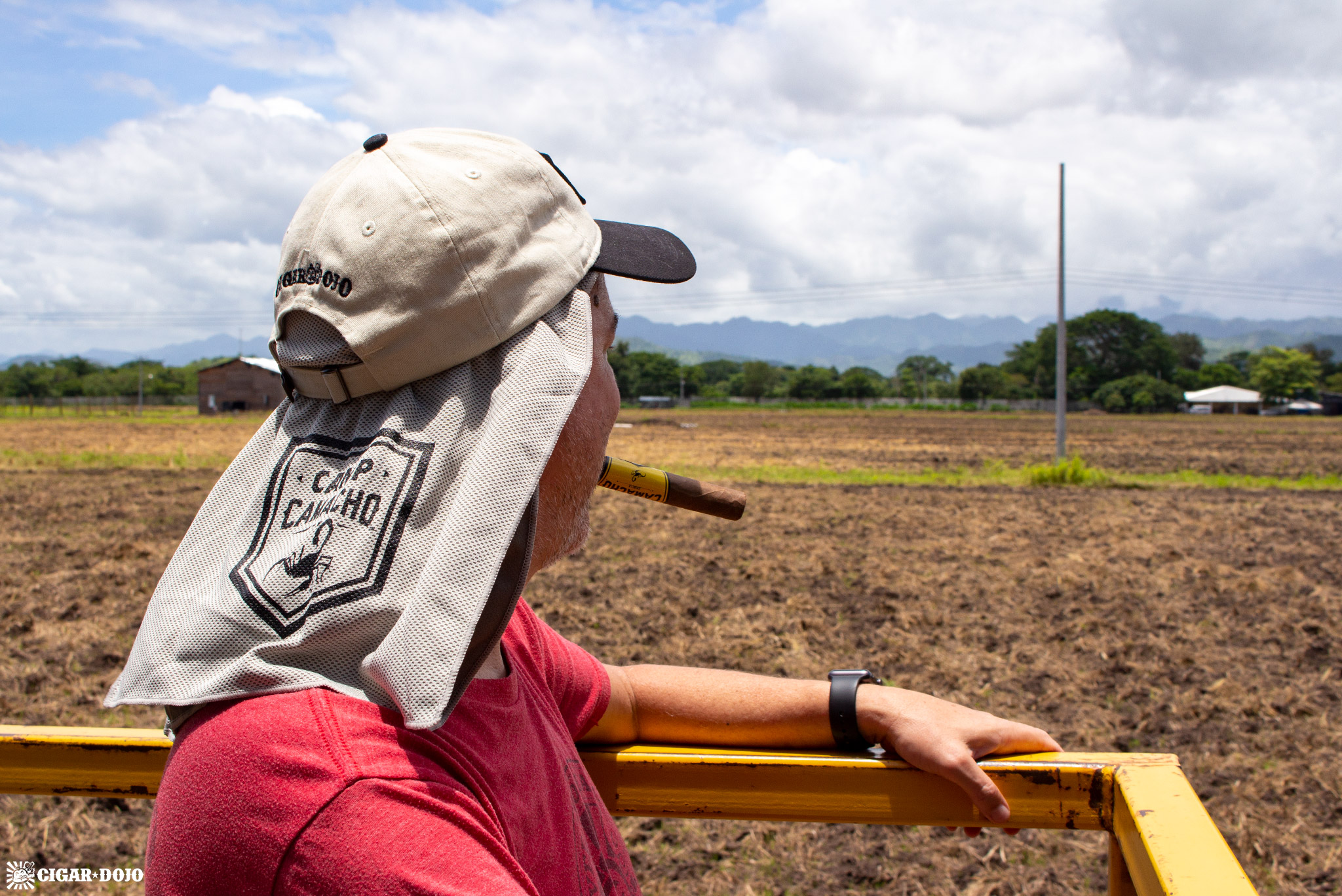
On the second day we visited Camacho’s own farm in the Jamastran Valley (roughly 30 minutes from Danlí). The farm—officially titled Finca la Merced—was purchased in 2015, coinciding with the announcement that the company would begin construction on the new factory. The plot is 138 acres, offering multiple curing barns and annual harvests of 93,352 pounds of tobacco. Unfortunately, as our trip needed to be planned before Camp Camacho is opened to the public in February 2019, there was no tobacco planted or curing in the barns. We were, however, able to take a 45-minute tour of the fields—being pulled in a flat-bed trailer by one of the farm’s tractors.
View this post on InstagramCamp Camacho: The Lost World #campCamacho #dojoCamp2018 #jurassicpark @camachocigars @cigardojo
View this post on Instagram
In the absence of flourishing tobacco, Cigar Dojo made due, repurposing tobacco laths (used to hang tobacco in the curing barns) as spears. Scott Kolesaire, senior brand manager at Camacho, and Jack Heyer, Cigar Dojo contributor, entered into a grueling round of spear-based competition, pictured below.


Day two was capped off at a local hotel/restaurant, where the group’s propensity to abide by Camacho’s “Live Loud” motto lead to a massive exodus of what seemed like half of the hotel’s guests. We had no idea Bluetooth speakers packed this much punch until George Rami, Camacho brand ambassador, unloaded his arsenal of audio equipment throughout the trip.

Day three was somewhat unexpected, as Camacho had diverted from the zip-lining excursion advertised in the Camp Camacho marketing materials, instead offering a casual mountain hike through the local Montaña Santa Emilia. So casual was the hike advertised, that most of the group dressed in shorts and sneakers—a fateful misstep. Without delving too much into the nitty gritty, let me just warn future campers, this hike is NO JOKE! This is saying a lot coming from a group of Coloradans… I suppose our first clue of difficulty came when the tour guide came prepared with only two items: a revolver and a machete.
Flip through photos below to see more
Despite multiple near-death experiences (there’s less sarcasm in my voice than you may think), the group departed the howler-monkey-laden mountain nearly unscathed; returning to Camp Camacho with enough energy to experience Davidoff/Camacho’s modern marvel of cigar manufacturing: Agroindustrias Diadema Zona Franca Honduras, S.A. (aka Diadema Cigars de Honduras, aka Camacho factory).
Manuel Batista lead the tour, showcasing the 117,500 square feet of the newly built facility. The tour begins with the rolling room floor, where hundreds of rolling pairs greet Manuel by pounding their fists on the tables before them. This is a large and impressive space, being located upstairs, where oversized windows let in plenty of light and spectacular views of the surrounding fields (a similar feel to the historic Joya de Nicaragua factory, for those that have been).
Flip through photos below to see more
We were then taken downstairs, were Camacho ferments their tobacco and prepares bales for storage. There are many rooms sectioned off for the various sorting, hydrating, deveining, heating, and cooling processes that the tobacco will go through before making its way to the torcedores. Areas of particular interest included a steam-filled room to re-hydrate aged leaves. Camacho constructed large cylinders (roughly 12 feet tall) where tobacco was hung, rotating the leaves from floor to ceiling, allowing the leaves to absorb water from intermittent bursts of steam coming up from beneath the floor. There is also a heating room (helping with wrapper fermentation) that is well above 100 °F—putting even the most hardened enthusiast through their paces with a nostril-stinging emittance of ammonia. This is contrasted with a neighboring room kept at 18 °F, helping to eliminate the future potential for beetles in the tobacco.

The tour finished with the presenting of our finished cigars, which feature perhaps the best presentation you’ll find in a cigar-blending experimentation such as this. Altogether, being built from the ground-up, specifically tailored for modern cigar manufacturing techniques, Camacho’s facility was one of the cleanest and most impressive that Cigar Dojo has encountered.
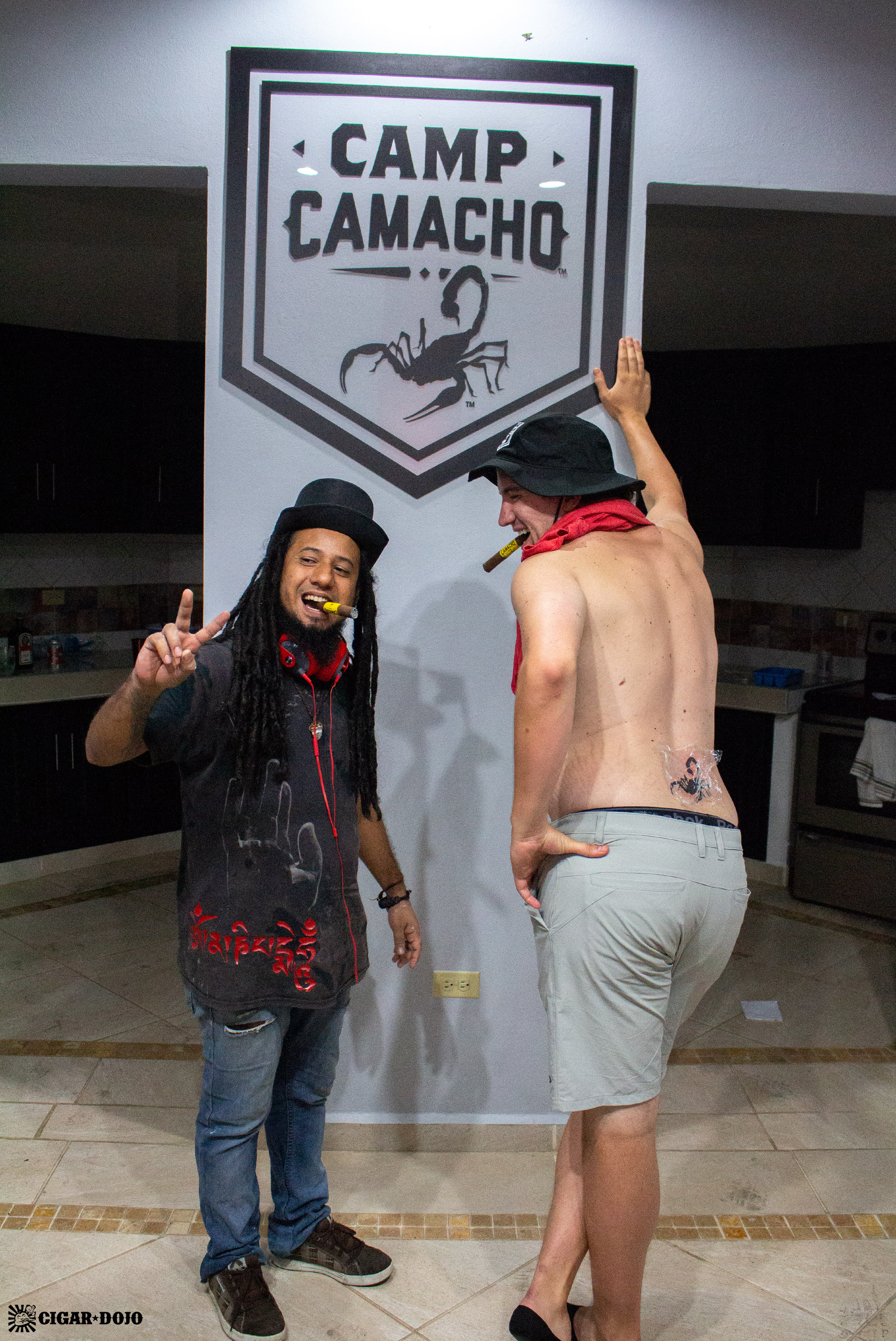
As a final “grand finale,” Camacho treated us to one last dinner—which was understandably eclipsed by the distraction of a tattoo gun in the background. What started, on the trip’s first day, as an amusing quest to be inked with Camacho’s scorpion logo, suddenly became a reality by the trip’s conclusion. Cigar Dojo’s own Jack Heyer was not only inked by what appeared to by Honduras’ finest, but “tramp stamped,” taking home a six-inch scorpion on his lower back.
Flip through photos below to see more
View this post on Instagram
Comparing parent company Davidoff’s own Viaje al Origen excursion (which we attended earlier this year) to Camp Camacho is in direct contrast. While both are equally inspiring, Camp Camacho truly shows why the brand is known as “The Bold Standard” in the realm of premium cigars.
Additional Info
Camp Camacho
- The return of Camp Camacho was first announced in November 2017.
- Camp Camacho is set to officially launch in 2019, with nine tour dates open to the public, spanning from February to April.
- Camacho’s guest house can accommodate 18 guests in its 11 total rooms (or 20 people total, including Camacho employees).
- Each Camp Camacho trip is 4 days, 3 nights long.
- Camp Camacho is $650 per person (not including airfare), although there is a special currently running that will save guests $150 (promo code CCEARLYBIRD).
- Tickets for Camp Camacho can be purchased here.
- Extracurricular activities may be requested, with Executive Assistant of the General Director Barbara Penman (aka Camp Camacho guide extraordinaire) able to secure the Dojo special/unusual requests such as iguana soup and a legit tattoo artist.
Camacho Factory
- Diadema Cigars de Honduras is often referred to simply as the Camacho Factory, but the official title is Agroindustrias Diadema Zona Franca Honduras, S.A.
- Construction for Diadema Cigars de Honduras, S.A. was first announced in 2015, along with the purchase of Camacho’s Finca La Merced tobacco farm in the Jamastran Valley.
- Diadema Cigars de Honduras factory was designed by Honduran architect Gonzalo Núñez Díaz.
- The factory is 117,500 sq ft, with parent company Davidoff breaking ground in April of 2015 and completing construction in June 2016.
- The complete size of Camacho’s land for the factory and guest house is nearly 450,000 sq ft.
- Camacho’s tobacco farm (Finca La Merced) is 138 acres and produces 93,352 lbs of tobacco annually.
- The factory began producing cigars in the late summer of 2016, transitioning from the company’s former AgroIndustrias Laepe S.A. factory (located only minutes from the new facility) that was used since (and prior to) the time of Camacho’s acquisition by Oettinger Davidoff Group in 2008.
- The official opening of Diadema Cigars de Honduras was in late May, 2017.
- AgroIndustrias Laepe is no longer in operation, with the company planning to divest the facility.
- Some veteran factory employees have remained with Camacho for nearly three decades.
- Camacho employs over 500 people in its local city of Danlí.
- Aside from nearly all Camacho cigars (American Barrel-Aged is rolled at Davidoff’s facilities in the DR), Diadema Cigars de Honduras produces other brands such as Baccarat, Cusano, Blind Man’s Bluff (contracted by Caldwell Cigar Co.), and Archetype Strange Passage (contracted by Ventura Cigar Co.), among many others.
Click images below for full resolution







Short Link: