

There’s a moment in every long barbecue cook when the day settles into itself. The fire’s stable, the smoke is rolling clean and thin, and the meat’s been on long enough that I’ve stopped opening the lid every twenty minutes to check on it. The yard smells like rendered fat, hardwood, and charcoal.
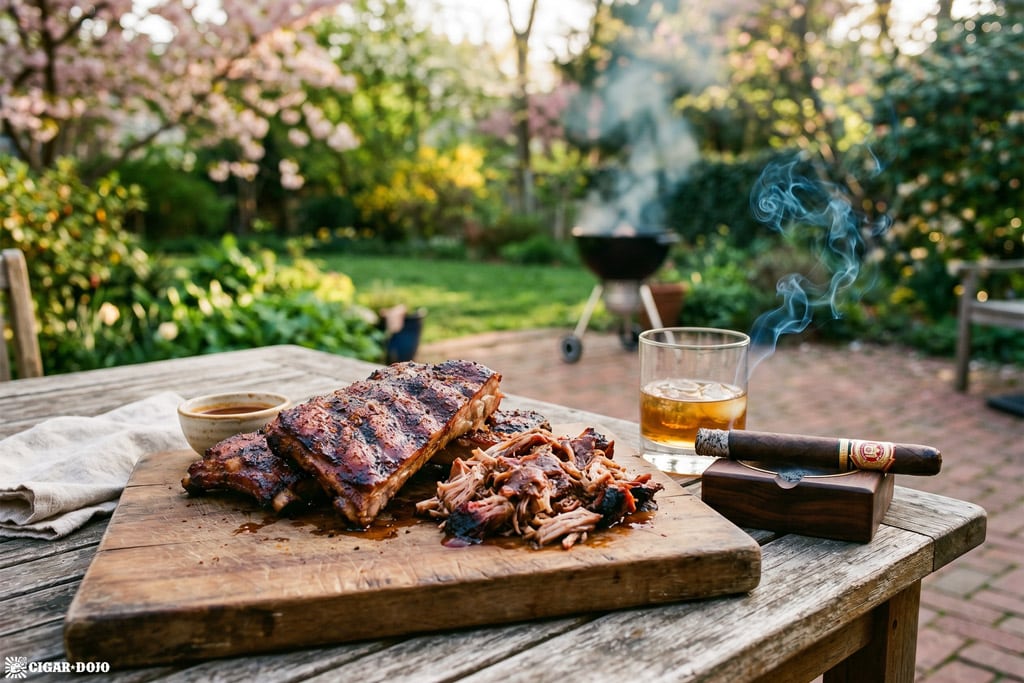
That’s usually when I sit down, pour a drink, and light a cigar.
Memorial Day has always been the unofficial start of all that for me. The kind of barbecue season built around long cooks, cigar smoke, and slowing the whole day down on purpose.
I love trying new techniques and new wood combinations, but two cooks pull me back every year: pulled pork and ribs. Not because they’re trendy or because they win competitions. Because they cover everything I actually care about in barbecue. Texture. Smoke. Patience. Bark. Knowing how to manage fire. Layering flavor without burying it.
Years in, I’ve stopped thinking about barbecue as a recipe thing. It’s more about understanding what every decision is doing to the final bite. Wrap too soon, the bark goes soft. Too much binder, the outside turns muddy. Push the smoke too hard and you get bitterness instead of barbecue. Lean too sweet, balance is gone. Cook past tender into mush, texture’s gone with it.
What follows is how I actually cook these two. Years of trying things, screwing things up, judging contests, talking to better cooks than me, and slowly learning to pay attention.
Pulled Pork
Bark, Smoke & Structure
A pork shoulder might be the most forgiving cut in barbecue, but that doesn’t make it easy. Done right, you get smoke, bark, rendered fat, and pulled strands that hold their shape. Done wrong, you usually end up at one of two extremes: pale, underdeveloped bark or pork mush.
I’m not after pork paste. I want strands that hold up. I want bark on every bite.
Bark isn’t just texture for me. It’s structure. Same way the crust holds a loaf of bread together, or a sear is what makes a steak feel like a steak. Without bark, pulled pork loses contrast and starts tasting flat no matter how much sauce you throw at it.
Pretty much every decision I make on a shoulder cook comes back to bark.
The Cooker
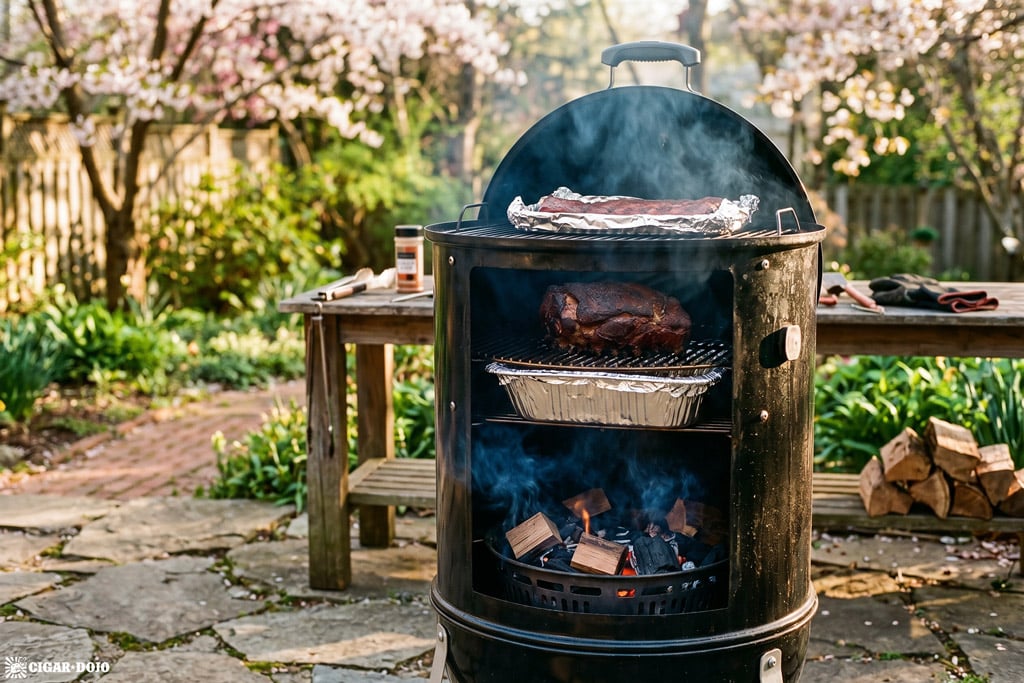
I cook mostly on a 22″ Weber Smokey Mountain. The thing that surprises people: I run the water pan dry. I wrap it in foil and use it purely as a heat shield. Water in the pan creates a humid environment that softens bark and adds moisture I don’t want. Running it dry keeps things hot and clean.
I also use a vortex basket, which changes how air moves through the cooker and pushes bark formation harder. Vertical geometry, dry deflector, and vortex airflow together get me the conditions I want. Aggressive bark. Clean smoke. Efficient combustion.
A vertical smoker feels alive when it’s drafting properly. You can hear it. You can feel the pull change when you nudge a vent. Once you learn how yours wants to run, it becomes a really expressive way to cook.
Fuel & Wood
My base fuel is Kingsford Professional briquettes. Nothing fancy about it. I use them because they’re consistent, and a stable coal bed means stable airflow, stable combustion, and cleaner smoke.
For wood I run roughly 75% hickory, 25% apple. Hickory carries the savory backbone. Apple takes the edge off and adds a little aromatic lift without going sweet.
I think about wood the way I think about cigar blends or cocktails. You’re not chasing maximum intensity, you’re chasing balance. Too much smoke ruins meat just as fast as too little does.
The Prep
This might honestly be my favorite part of the whole cook. Trimming a shoulder properly forces you to slow down before the fire’s even lit. You start to see the cut for what it is. Where fat sits, how the muscles overlap, where bark will form, how air will move across the surface once it’s on the smoker.
I trim aggressively. Thick fat caps, silver skin, hard fat deposits all come off. I’m not going for pretty. I want surface area exposed so seasoning, smoke, and bark all have somewhere to land. Fat caps don’t magically melt into the meat the way people say they do. Most of the time they just block everything you actually want.
I also separate and expose the money muscle as much as I can during prep. And when the cook is finished, the money muscle never goes into the pull. It comes off whole, gets sliced into ¾” medallions, and gets served on its own. If you know barbecue you know the money muscle, but you might not know how much better it eats when you treat it as its own thing instead of shredding it into the pile. Each medallion has rendered pork, pepper, smoke, bark, fat, and salt in a single bite. Pretty close to the best bite you’ll ever take off a pit.
Knives matter. I’m a believer in good boning knives kept sharp, and I touch mine up on a stone before every cook. Not to look cool. Dull knives fight you. There’s also something about maintaining your own tools beforehand. It puts you in the right headspace before you light anything.
The Dry Brine
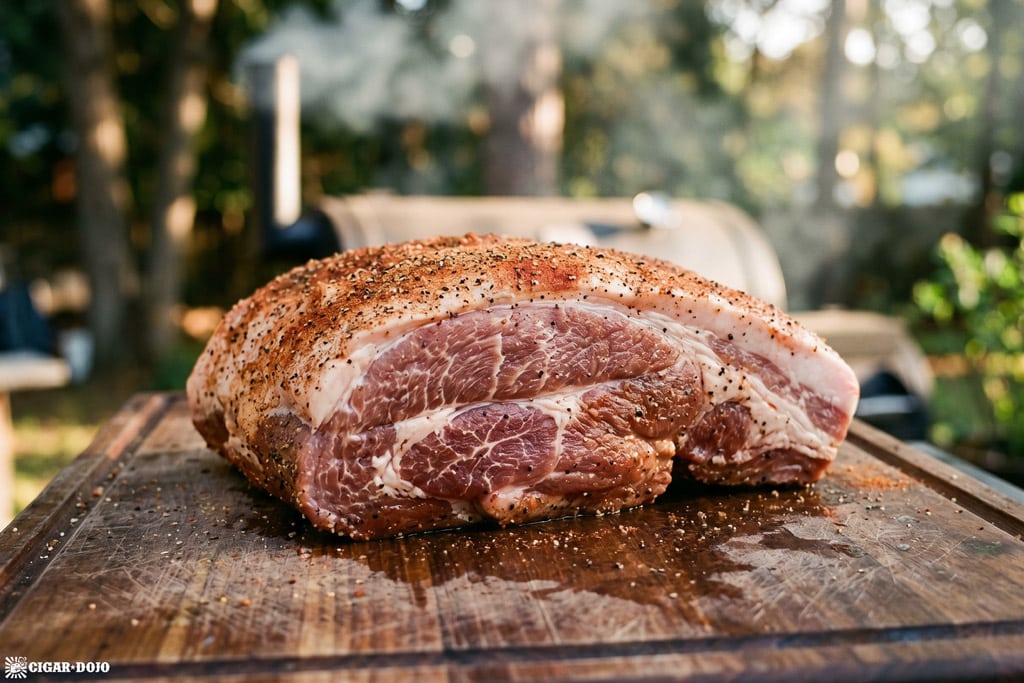
After trimming, the shoulder gets dry brined overnight with kosher salt. Just salt. No rub yet, no binder, no sugar.
The salt has time to work into the meat overnight, helps with moisture retention, and improves texture from the inside out. The brine and the rub do different jobs. The salt works overnight, the rub works during the cook. Keeping those separated matters.
The Morning Of
About an hour before the shoulder goes on, I pull it out of the fridge so the surface can take some of the chill off. I’m not trying to bring it fully to room temp. On a cut that big, that would take half a day. I just want the surface a little less cold when smoke hits it.
This is also when the cook starts feeling real. The salt has tightened the surface. The pork already smells seasoned. The smoker is warming up and wood smoke is drifting across the yard. The cook has basically started, even if nothing’s on the grate yet.
Binder & Rub
I use yellow mustard as a binder, but this is where a lot of cooks wreck the bark before they even start. The binder should be barely there. Its only job is to help the rub stick. If the shoulder looks wet or sloppy, you’ve already hurt yourself. Bark needs restraint.
Once the binder’s on, the rub goes on heavy right before the shoulder hits the smoker. My style runs savory and pepper-forward with some sweetness, not candy. Lately, I’ve been layering Meat Church Holy Voodoo and Butt Kick’n Chicken together. I think of it like blending. Salt, sweet, smoke, heat, savory, aromatic, all pulling their weight without any one of them shouting.
The Cook
Shoulders run between 250°F and 275°F for me. I don’t obsess over precise numbers anymore. Clean combustion and stable airflow matter way more than chasing single-degree fluctuations on a digital readout. What I’m actually watching is bark color, bark texture, smoke quality, and how the surface is rendering.
The smoke should stay clean and light. Thin and blue, not heavy and white. Dirty smoke leaves a bitterness no sauce will fix later.
Early in the cook I leave the shoulder alone. No constant spritzing, no opening the lid every twenty minutes to check on it. Every time the lid comes off, airflow, heat, bark, and combustion all take a hit. Trust the fire.
Wrapping & Moisture
I prefer not to wrap pulled pork. Wrapping is a trade. You get a faster cook and softer bark. Sometimes that trade is worth it, sometimes it isn’t, but since bark is the whole point for me, I usually skip it. If I do wrap, it’s late in the cook and only for moisture management or to hold the meat, not as a default.
Decisions on purpose, not on autopilot.
Finishing
I cook by feel, not by number. Most shoulders finish in the 205°F to 208°F range, but tenderness is the actual goal. The probe should slide through with almost no resistance. The bone should wiggle freely. The shoulder should feel soft and still have structure.
Tender isn’t the same as mushy.
The Rest
The rest is part of the cook, not an afterthought. Once the shoulder’s done I wrap it and hold it in a Cambro or insulated cooler for a few hours. Collagen keeps converting slowly and evenly, and the texture gets noticeably better. Long heated rests are one of the harder lessons for backyard cooks. Sometimes doing nothing is the last skill.
Pulling the Pork
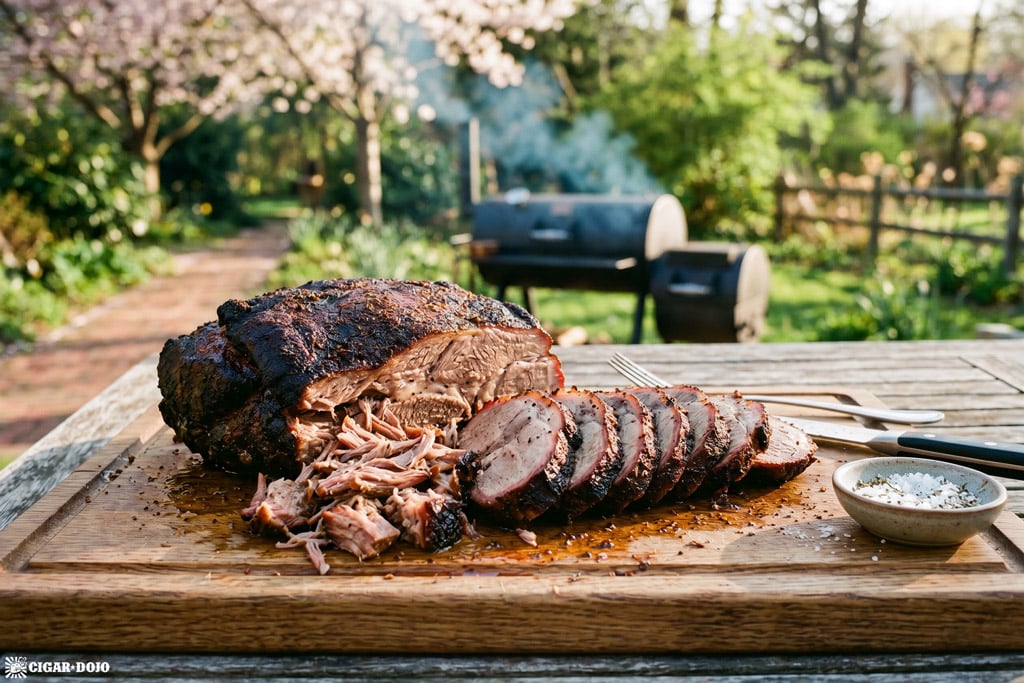
Before anything else, the money muscle comes off. Sliced into medallions, served on its own. It earned that treatment during the cook. It doesn’t belong in the pile.
Then I pull the rest. I take out the bone, big fat pockets, and connective tissue, and mix bark, interior meat, and juices so every bite has some of everything. Smoke, fat, pepper, bark, moisture.
Serve the pulled. Then bring out the medallions. Watch what happens when someone hits one for the first time.
Reheating BBQ Properly
Sous vide is the best way to reheat barbecue, full stop. Microwaves wreck texture. Dry reheating sucks the moisture out. Sous vide keeps bark, rendered fat, moisture, and texture intact. Vacuum seal portions with their juices and warm them gently in a water bath. Done right, you’d swear it’s fresh off the smoker.
Pairing Notes
For cigars, I go medium body. Something with enough backbone to stand up to rendered fat and smoke but not so big it bullies the food. For drinks, crisp lagers, Mexican lagers, bourbon highballs, ranch waters, and pale ales all work. Once you’re dealing with rendered fat and smoky food, you want some acid and carbonation working for you.
What Most People Get Wrong
- Too much binder. That’s mud, not adhesive.
- Wrapping too early. You can’t build bark in steam.
- Oversmoking. Heavy smoke isn’t more flavor, it’s worse flavor.
- Chasing numbers. Learn to cook by feel.
St. Louis Spare Ribs
Why Ribs Hit Different
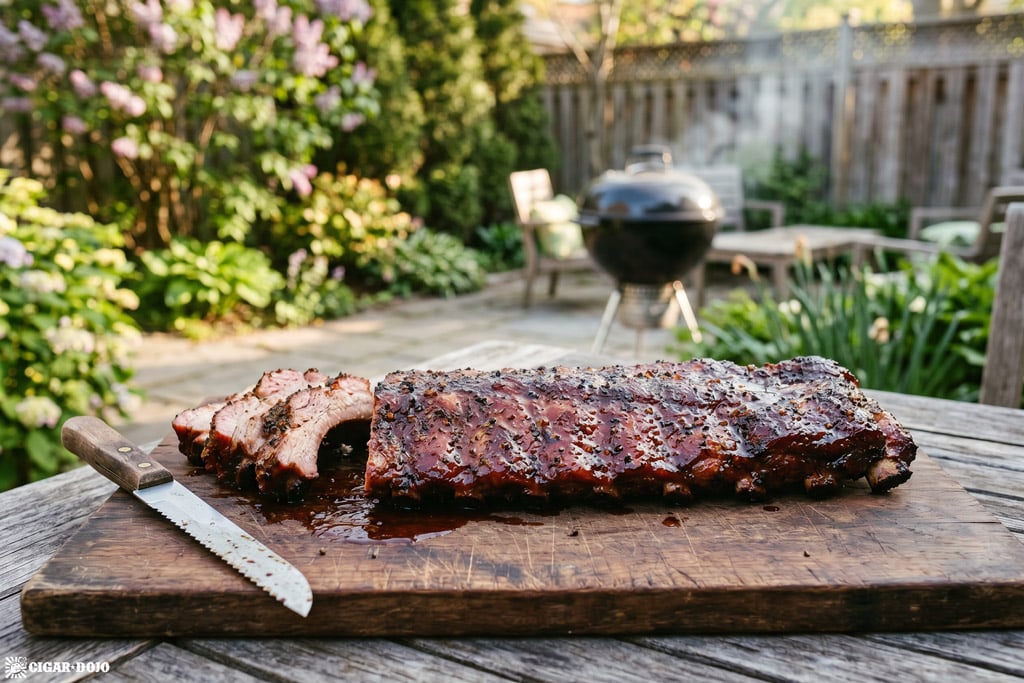
There might not be a more universally loved barbecue experience than a good rack of ribs. People eat them with their hands. They’ll lean over your cutting board and snag pieces before dinner’s even on the table. The minute a glaze starts catching the light on the rack, guests show up at the pit without being called.
Ribs are emotional. I love that about them.
I love competition-style ribs when they’re done well. The Kansas City-leaning combination of smoke, bark, butter, sweetness, glaze, and fat is hard to beat. But even on wrapped ribs, you start where you always start. Build the bark first. Foil doesn’t make bark. It tests it.
The Goal Is the Perfect Bite
I don’t cook ribs to fall off the bone. People throw that phrase around like it’s the standard, but fall-off-the-bone is just overcooked. The best ribs don’t collapse. They give. Clean bite-through, a little resistance, then collagen letting go and meat coming clean off the bone. That little bit of tension is what makes ribs interesting. Lose it and you’ve got pork candy.
Rib Selection & Prep
I cook St. Louis-cut spares. Richer pork flavor than baby backs, better bark, more even cooking geometry, and more fat. I remove the membrane completely. Loose edges and thin sections come off too, since they’ll dry out and burn before the rest of the rack is ready.
Then the ribs get the same overnight kosher salt dry brine I do on the shoulder. Same philosophy across both. Salt overnight, rub at cook time.
Binder & Rub
Same approach as the shoulder. The mustard binder stays barely there. Too much binder traps moisture and softens bark before you even start. Rub goes on heavy, right before the ribs hit the grate.
Building Black Gold
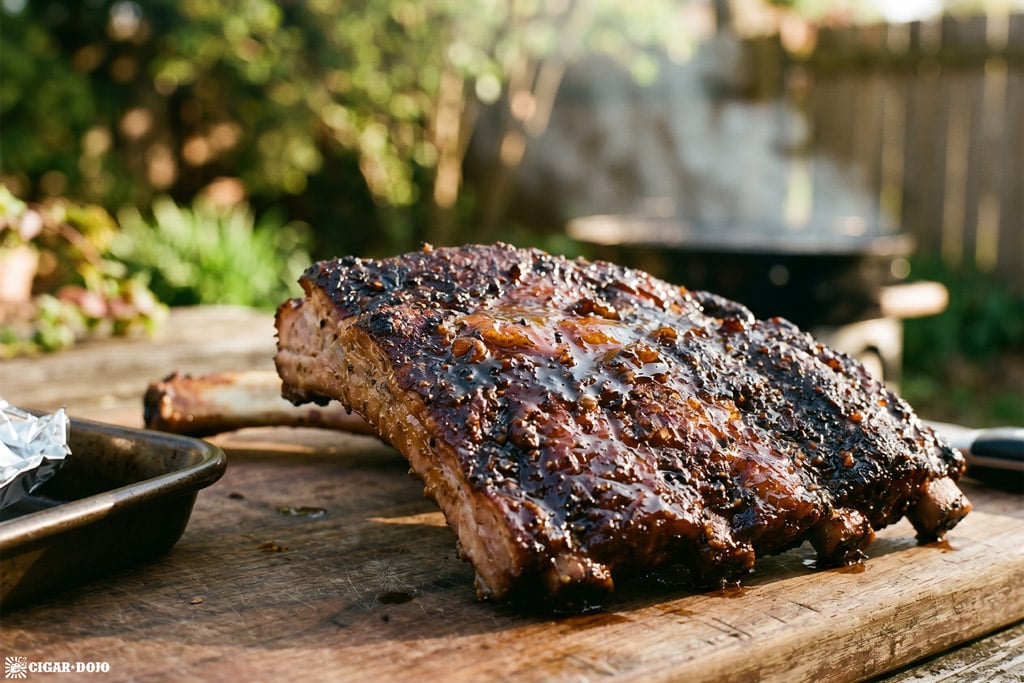
Ribs go on between 250°F and 275°F. The early hours of the cook are all about bark and smoke quality. This is where black gold gets built. That dark, rendered exterior that carries seasoning, smoke, and texture all at once.
This is also where a lot of people fall into a trap, wrapping by the clock instead of by the bark. If the bark isn’t fully set when you wrap, the foil softens everything into seasoning paste. The clock doesn’t tell you when to wrap. The bark does.
The Wrap
Once the bark is locked in, this stage is fun. I wrap with butter, brown sugar, honey, and a little more rub. The rendered fat shows up on its own. The whole package builds gloss, sweetness, and sticky layering inside the foil.
It’s also where the cook gets unforgiving. The window between perfectly rendered and overcooked can be ten minutes. That’s exactly why bark matters so much going in. Black gold gives the ribs enough structure to survive what happens inside the foil.
Finishing
After the wrap I usually bump the smoker closer to 300°F to firm everything back up. From here it’s all feel.
The rack should be just loose enough that if I picked it up by the middle with my finger underneath, both ends would drape down without breaking apart. That’s the spot. Too stiff means more time. Too soft means I’ve gone past it. The right rack still pushes back a little.
When the ribs feel right, I take them out of the foil, flip them meat side up, and brush on a light coat of sauce. Then I tent the foil loosely back over them while they rest. I’m not trying to bake the sauce on. I just want the glaze to tighten up and get tacky while the meat settles.
The resting period matters. The bark holds, the sauce sets, the rack firms up without drying out.
When it’s time to slice, I flip the rack bone-side up so I can follow each bone clean and leave meat on both sides of every cut.
Sticky fingers, smoke in the air, black gold under the glaze. That’s what barbecue’s supposed to feel like.
Short Link: